
Meat and Meat product Texture analyzer & method
Meat Texture Analyzer
Simulate Chewing and Cutting Actions to Quantify Meat Properties
About Us
Meat Texture Analyzer
Meat Texture Analysis is a crucial method for evaluating the physical properties of meat and meat products, including tenderness, firmness, cohesiveness, and chewiness. With growing consumer expectations and stringent industry standards, meat processors and quality control teams rely on Meat Texture Analyzers to provide accurate, reproducible, and quantitative measurements of texture attributes. Using a Meat Texture Analyzer, manufacturers can optimize product formulation, monitor consistency, and ensure high-quality meat products reach consumers.
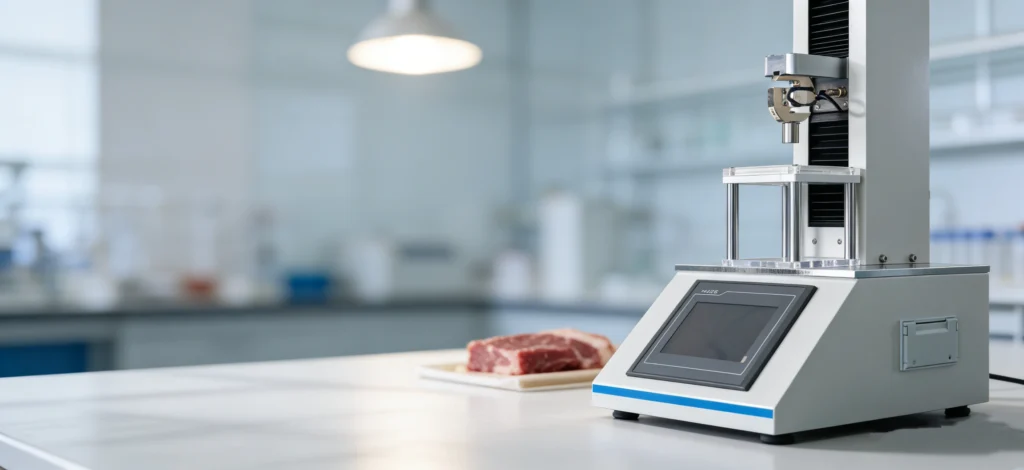
Measurement Drives Product Quality and Consumer Satisfaction
Why Meat Texture Analysis Matters
Meat Texture Analysis is not just a laboratory procedure—it is a critical component of quality assurance, product development, and regulatory compliance. Understanding the physical properties of meat, such as tenderness, chewiness, and cohesiveness, allows manufacturers to consistently deliver high-quality products that meet both consumer expectations and industry standards.
Quality Control:
Ensures batch-to-batch consistency of fresh and processed meat.
Product Development:
Guides formulation adjustments and processing optimization.
Compliance:
Meets industry standards for safety, texture, and quality.
Shelf-Life Studies:
Monitors textural changes during storage.
Industries and Applications of Meat Texture Analysis
Food Industry – Meat & Processed Products
Ensures consistent tenderness, chewiness, and texture in steaks, roasts, sausages, meat patties, ham, and processed meat products.
R&D and Product Development
Guides formulation optimization and processing adjustments for new meat products, ready-to-eat meals, and alternative protein products.
Quality Control Laboratories
Monitors batch-to-batch consistency of meat texture, firmness, and cohesiveness for fresh, cooked, and multi-fiber meat samples.
Frozen & Packaged Meat Production
Evaluates thawing, freezing, and storage effects on meat texture for frozen cuts, pre-cooked meals, and deli meats.
Accessories for Meat Texture Testing
Cell Instruments provides a variety of accessories tailored for meat and meat products, including:
- Warner-Bratzler Shear Blades: Measures tenderness accurately for steaks, roasts, and processed meats.
- Puncture and Cylinder Probes: Evaluates firmness, elasticity, and cohesiveness of fresh or cooked meat.
- Kramer Shear Cell: Designed for multi-fiber meat samples, it measures shear force for sausages, ground meat, and mixed meat products, providing rapid, reproducible results for QC and R&D.
- Cutting and Blade Fixtures: Designed for sausages, hams, meat patties, and uniform sample preparation.
- Sample Holders and Clamps: Secure meat samples during TPA or shear tests, ensuring reproducibility.
- Microprinters & Software Integration: Capture data automatically and generate detailed reports for QC and R&D.
Methods of Meat Texture Analysis
01
Texture Profile Analysis (TPA)
TPA simulates human chewing by compressing meat samples twice. The resulting force-time curve quantifies hardness, cohesiveness, springiness, and chewiness, providing insight into sensory attributes.
02
Shear Force Analysis
Using Warner-Bratzler shear force testers, this method measures the force required to cut through meat fibers, a key indicator of tenderness for consumer satisfaction.
03
Cutting Force Measurement
A probe or blade measures the resistance of meat fibers to cutting, essential for processed products like sausages, hams, and meat patties.
04
Tenderness Testing
Determines how easily meat fibers break during chewing. Using Kramer shear cells or specialized probes, this test helps quantify consumer-perceived tenderness and supports quality control for steaks, roasts, sausages, and processed meat products.
These methods provide detailed, quantitative insights into meat texture, helping manufacturers maintain quality and optimize product formulation.
TEX-01 & TEX-02 & TEX-01Pro
TEX Series Texture Analyzers for Meat Applications

| Model | Test Range | Speed (mm/min) | Stroke (mm) | Key Methods & Features | Power | Dimensions (L×W×H mm) |
|---|---|---|---|---|---|---|
| TEX-01 | 50 kg | 1–500 | 250 | Compression, Gel Strength, Hardness & Fracturability, Tensile, Hold to Load | AC 110–220V | 410 × 360 × 820 |
| TEX-02 | 20 kg | 1–500 | 110 | Compression, Gel Strength, Hardness & Fracturability, Tensile | AC 110–220V | 450 × 300 × 360 |
| TEX-01Pro | 50 kg | 1–500 | 250 | Full TPA, Compression, Gel Strength, Hardness & Fracturability, Tensile, Hold to Load, Bloom Test | AC 110–220V | 410 × 360 × 820 |
Selecting the Right Analyzer for Your Meat Testing Needs.
Price of Texture Analyzer for Meat Applications
Cell Instruments offers a range of texture analyzers suitable for meat testing, from basic compression instruments to advanced models with Texture Profile Analysis (TPA) and Warner-Bratzler shear force testing. Pricing depends on model, test capabilities, and optional accessories. Choosing the right instrument ensures accurate shear force analysis, cutting force measurement, and comprehensive TPA testing for fresh and processed meat products.
Frequently Asked Questions about Texture Analyzer
What is Meat Texture Analysis?
Meat Texture Analysis uses specialized instruments to quantify the firmness, tenderness, chewiness, and cohesiveness of meat and meat products. It provides objective data to support quality control, product development, and sensory evaluation.
Which meat products can be tested with TEX analyzers?
The TEX series can test a wide range of products including fresh, cooked, processed meats, sausages, ham, steaks, meat patties, and alternative protein products.
What testing methods are available?
Common methods include Texture Profile Analysis (TPA), Shear Force Analysis, Compression/Hardness Tests, Tensile Tests, and Tenderness Testing using accessories like Warner-Bratzler blades or Kramer shear cells.
Can TEX analyzers be customized for specific meat products?
Yes. Cell Instruments offers custom probes, fixtures, and test programs to adapt the TEX series for unique product types or specialized testing requirements.